
How Arrest Warrants Work in Morrison County
An arrest warrant is a court order that allows a person to be taken into custody. Minnesota's arrest statute describes a peace officer's authority to arrest under a warrant. The order itself follows a charging document that a judge has reviewed first. That review is the hinge of the whole process. Morrison County has one trial court for these cases. Morrison County District Court takes the criminal filings. The same court also handles traffic, family, and juvenile matters, and each of those can produce its own orders. No county page publishes a searchable arrest-warrant registry, so the case file is the record that counts.
Morrison County Arrest Warrant Basics
A warrant never appears out of nowhere. A complaint or citation sets out the charge and the facts behind it. The court reviews that material before authorizing custody, and that review is where probable cause enters the picture. Minnesota Rule of Criminal Procedure 6 covers the summons, warrant, and release provisions that follow. It also spells out what a citation must contain and when a warrant may issue after a failure to appear. Form 8 in the state's criminal forms set supports an application and warrant for appearance after a missed date. What none of this produces is a public list. Morrison County posts no online arrest-warrant search. The practical warrant check in Morrison County runs through the case record and the clerk, so call before assuming anything.
Morrison County Arrest Warrants: What They Contain
A public court or law-enforcement record ties the warrant to the case file behind it. That record is the field list below, and it is also your list of things to ask about when you call Morrison County.
| Court File Number | The case identifier, and the value that ties the warrant to one file. |
|---|---|
| Person Name | The name as it appears on the case, which may differ from everyday use. |
| Charge or Legal Basis | The offense behind the order. |
| Issuing Court | Morrison County District Court for local cases. |
| Issuing Judicial Officer | The judge or officer connected to the court action, when public. |
| Issue Date | When the court authorized the order. |
| Service or Custody Event | Whether the warrant was executed and when. |
| Release Condition | Any court-set terms attached to the case. |
| Public-Access Class | Whether the record is public, confidential, or not remotely accessible. |
Note: The online case system does not expose every warrant document, so treat status as a field to confirm with the clerk.
Morrison County's Warrant Service Roles
Serving warrants is the sheriff's work, and the county site says so plainly. The Patrol Division notes that deputies serve warrants and civil process. Its published staffing is three sergeants, twelve full-time deputies, and seven part-time deputies. The Investigative Division works a different end of the same subject. The sheriff's 2025 annual report describes investigators preparing and executing search warrants and subpoenas. That work is separate from serving a warrant on a person. The office also holds criminal investigative jurisdiction at Camp Ripley.
Sheriff's Patrol Division
320-632-9233 · Serves warrants and civil process across the county and its 46 townships.
Sheriff's Records Unit
320-631-2895 · Produces records from investigations and charges 25 cents per page.
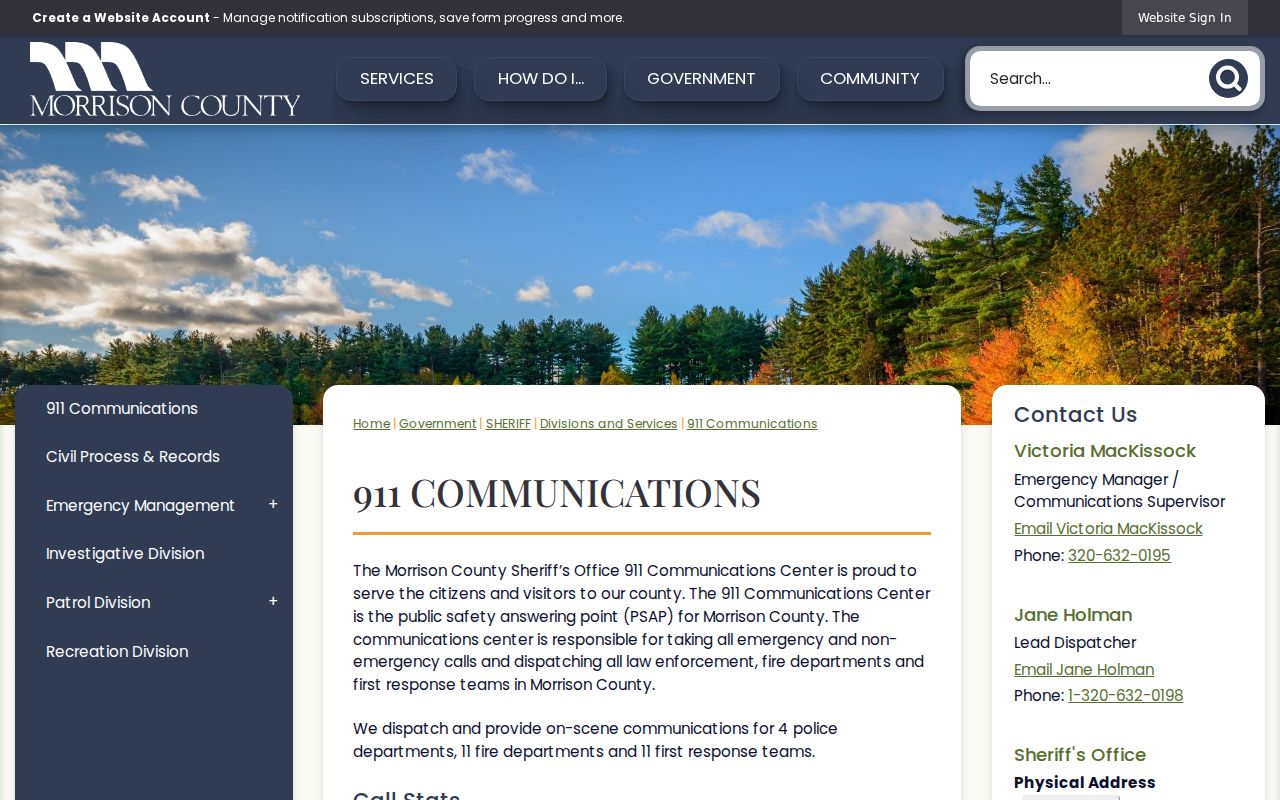
Dispatch is the non-emergency routing layer for Morrison County. Morrison County 911 communications explains what the dispatch side of the office covers, and it is a routing service rather than a record desk.
Call Morrison County dispatch for an unfolding situation, but call the court for the status of a warrant.
How Warrants Get Served in Morrison County
Who serves the order depends on who holds it and where the person is found. Sheriff's deputies serve county warrants and civil process. City officers in Little Falls, Pierz, Royalton, and Motley also enforce local law and can act on an order. The sheriff backs those departments up. Service is an event, not a status. A warrant that has been served may still sit in the case record, while one that has not been served stays open. A public record can show an old service entry and still leave the current question unanswered. If a Morrison County warrant has already led to custody, the jail is a facility rather than an information desk. The court order controls release. The sheriff's office can route questions about custody status.
Morrison County's Four City Police Departments
Four cities in Morrison County run their own departments, and one does not. Little Falls is the largest, with 24-hour service and roughly 16 full-time officers, four part-time officers, three investigators, and two civilian records staff. That coverage spans about eight square miles and 212 road miles. Pierz, Royalton, and Motley each keep a department with a police contact at city hall. The sheriff provides primary or secondary support to those cities and covers the rest of the county. A city resident may deal with a city officer on the arrest and a county office on the record. Which office you call depends on who created the record. A city incident report belongs to the city. A court file belongs to the district court, no matter which officer made the arrest.
How Morrison County Warrants and Summonses Differ
Three labels describe three different court directions in Morrison County, and they are not interchangeable. Those differences decide whether a person is taken into custody or simply told to appear.
| Process | What It Does | What to Confirm |
|---|---|---|
| Arrest warrant | Authorizes custody under court process | Whether it is still open and who holds it |
| Summons | Directs a person to appear | That it is a summons and not a warrant |
| Bench warrant | Responds to a missed date or a broken condition | The event that triggered it |
| Sign-and-release warrant | Uses notice and a new date for certain first-time misdemeanor failures to appear | Whether the case qualifies |
Morrison County Warrant Release Terms
How a Morrison County warrant gets released is never a fixed formula. Judges weigh each case on its own facts. Minnesota Rule of Criminal Procedure 6.02 starts from the light end, treating personal recognizance or an unsecured appearance bond as the default. When the court sees a reason to add teeth, it can impose supervision, restrict travel, or set a cash or appearance bond. The state also publishes CRM702, the appearance-only bail bond form. That document lists the court file number, the defendant, the bond amount, the charges, the principal and surety, and the agency information. Read the fine print and you learn two things. An appearance-only bond covers no fines or fees, and it carries a 180-day validity statement that runs from the agency's signature. Morrison County posts no general bond schedule to lean on. A dollar figure on a custody display belongs to one case alone, and it can move after the next court appearance. For the paperwork itself, Minnesota criminal court forms posts both the sign-and-release form and the appearance-only bond form.
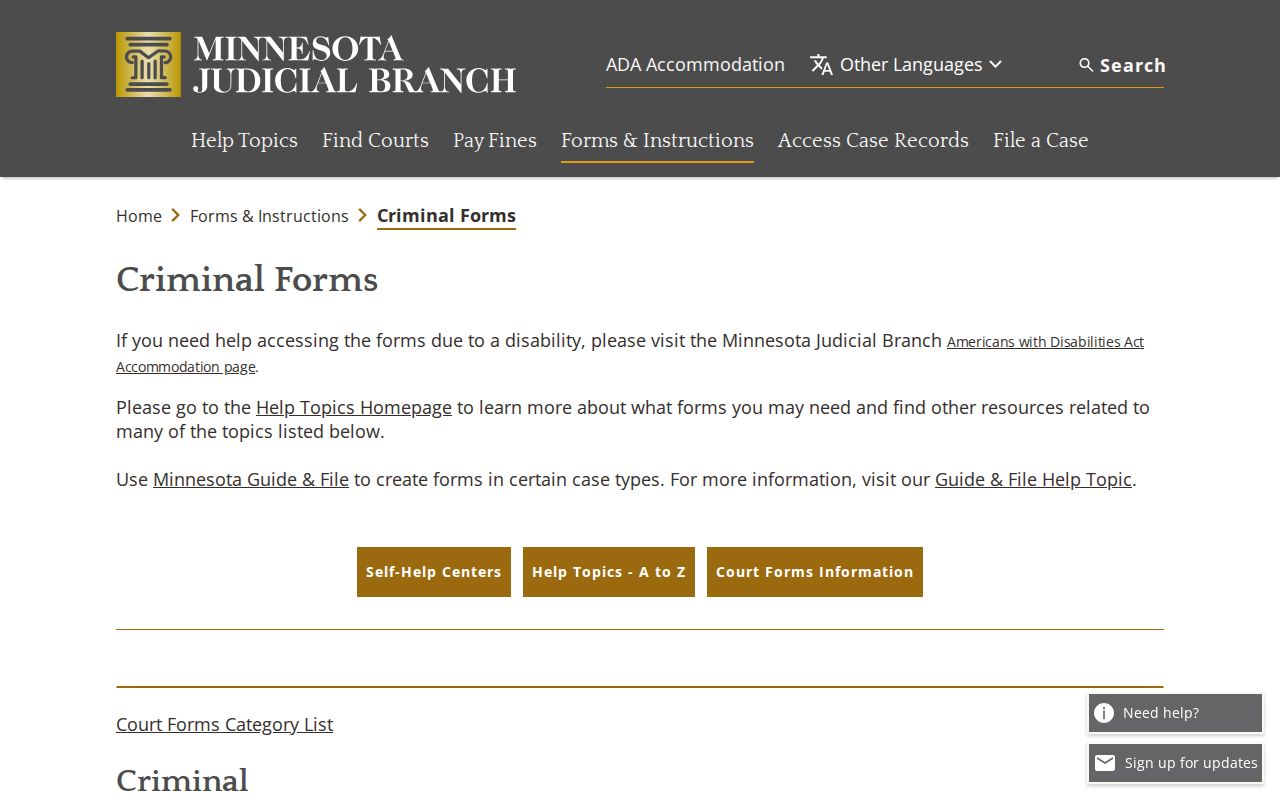
Forms in Morrison County only describe the process; no form tells you how a judge will rule on one case.
Handling an Arrest Warrant in Your Name
Slow down and take the shortest route. Write the case number down, call Court Administration to see what the Morrison County court record actually shows, and let a Minnesota attorney walk you through the options before you do anything that cannot be undone.
Important: Talk with a lawyer before you turn yourself in, and do not rely on a phone caller who claims a warrant exists and demands payment.
Your choices in Morrison County generally sort into four groups: a motion to recall or quash the warrant, a voluntary surrender and first appearance, posting bond under the court's release order, or a negotiated resolution that puts the case back in front of a judge. The charge and the court's decision drive which path fits. When the person named is a relative, spend your energy gathering paperwork instead of typing their name into unfamiliar sites. The court answers to a case number, not a worried phone call.
Federal Warrants and Morrison County Cases
A federal warrant is not a county record. Morrison County falls inside the federal District of Minnesota, where the district court and the U.S. Marshals Service run the federal criminal process. Neither Court Administration nor the county jail can confirm one for you.
Key Point: If a letter or docket number points to federal court, use the District of Minnesota Clerk's Office or the federal docket system, and verify any phone number independently.
One more warning deserves space here. The federal court has flagged callers who pose as the U.S. Marshals Service, spoof courthouse numbers, and demand instant payment over a claimed arrest warrant. State court calls run the same scam. The fix in Morrison County is simple: hang up, look the number up, and call the office yourself.